Friday, July 29, 2016

Walkers & Sitters For Your Pets Do You Need One

Walkers & Sitters For Your Pets

Walkers can be very important so that your pets get the right amount of exercise in order for them to stay physically and mentally healthy.  Often this means that a dog should be walked for at least a ½ hour or 45 minutes per day.  Without this amount of regular exercise your dog could become tense or mischievous and look for ways to dispel his energies.
If you do not have time to walk your dog then you may want to hire professional dog walkers to provide this service for your pet.  Simply put, dog walkers come to your home are specified hours of the day and take your dog for his required walk.  Sometimes a dog walker will take your dog to a dog park to let him run off his excess energy. 
Sometimes a dog walking service will take several dogs walking at the same time. This is not a bad thing, your dog learns to get along and socialize with other dogs.  It can be seen as your dog having a good time during his daily walking sessions.

Do Cats Need Walking Services

Cats also need a certain amount of exercise to stay healthy. Cats generally tend to supply their own form of exercise so it's not necessary to hire someone to ‘walk’ them.  Typically cats get their exercise by pouncing and jumping all over the house, on indoor cat trees and with cat toys.  Some cats can be trained to walk on a leash and you may consider getting a pet walking service to let your cat get some outside exercise.
If your pet is left alone while you are working. You can hire a pet sitter to keep your pet company.  A pet sitter can be hired for a dog or a cat.  The object is companionship for your pet while you are away.
Pet sitting services you choose should be committed to spending quality time with your pet.  Like walking them, playing with them, petting them and nurturing them—not just being there.  Of course pet sitters will also feed you pet for you, if required.  Some services will ‘sit’ with your pet overnight or longer in your home if you need to go away.
You can hire someone you know, or someone who has advertised in the newspaper to perform these tasks. There are also many very good professional walkers and pet sitters. Be sure to check out services and make sure they are bonded and insured.  They should be trained in first aid for dogs and cats.

Wednesday, July 27, 2016

Trainers For Your Pet

Pet Trainers/Evaluators
Pet trainers are exactly what the term implies:  people who train your pets.  Trainers can be very helpful when you do not have time or the skills to train your pet yourself.  They will take on the task of doing this job for you and offer dog friendly training techniques.  Look for a qualified pet trainer that is a certified member of a pet association.   And, ask if all pets are required to have been vaccinated before attending.
A skilled trainer will use humane methods to train your pet.  A good pet training facility will allow you to observe one of their classes before you enroll your pet.  You should note if the pets and people attending are enjoying themselves as this is an indication of how successful the training may be.  A good trainer should encourage all members of the family who interact with the pet to attend (if space permits, of course).  The lessons should also provide ample time for the participants to practice what is learned under the watchful eye of the trainer.  The participants should be allowed to ask questions and relay concerns.
You may also be able to hire a pet trainer on an individual basis.  In this case the pet trainer will come to your home and work with you and your pet on a one-on-one basis.  For some pets this is a great option, especially if the pet has trouble dealing with, or is aggressive towards, other members of its species.  This individual attention also allows you to learn to cope better with any specific problems or issues your pet may be having.

Trainers Or Evaluators

A pet evaluator may also be a pet trainer.  If you have any concerns that your dog may be a biter. This could be one of the situations where you may require a pet evaluator.  The evaluator can advise you on whether the dog is abnormally vicious or if their biting behavior can be corrected.  (A ‘red’ level rating is usually considered a vicious dog that may be uncontrollable.)
Pet evaluators are also often employed by SPCA agencies to evaluate whether an animal is adoptable.  They will evaluate the pet to see if, a dog will bite when feeding.  It may be ready to put up with children in a family setting.  Some pets are not adoptable. Some may only need more time to get over any psychological problems they may be experiencing.

Sunday, July 24, 2016


Psychiatrist For Your Pet's
A psychiatrist can help unbalanced or unstable pets can benefit greatly with the use of the services of pet psychiatrists. An unbalanced pet with a problem is more common that you may think.
Most people think that all they need to do to keep their pet healthy is to feed and love them. let them go outside to relieve themselves and provide a place for them to sleep.  But each pet is a unique individual and has its own character and personality traits.  Pets can be complex characters that have their own fears and idiosyncrasies.

A Psychiatrist Can Solve Some Pet Problems

First of all you need to get a pet psychiatrist to address your pet's problem. If your pet constantly kneads and claws furniture it could be a psychological problem. The cat will outgrow the problem behavior, but in extreme cases where the unwanted behavior continues, it may be time to consult your pet professional, a pet psychiatrist.  Pet psychiatrists can be called in to address aggressive and fearful behaviors in cats and dogs.
Pet psychiatrists are academic professionals who have studied animal behavior. They should know how to address your pet’s problem in a positive way.  They have studied what makes animals tick and are quite adept at identifying why your pet may be behaving the way he is, in other words, what is causing his problem.  The pet psychiatrist can show you how to work with your pet to re-train or re-direct his problem behavior.
Get the pet psychiatrist to meet with you and your pet for an appointment.  A pet psychiatrist might want to observe the pet doing the unwanted behavior. Sometimes the appointments will be in your home environment.  The pet professional will then discuss a plan of action with you to help you modify the unwanted behavior.
Having a problem with your pet and you cannot seem to solve it? You may need to call in a pet psychiatrist for their help and input. Pet professionals will go beyond your pet’s physical well-being. Psychiatrists can know more what your pet’s personality is like and what makes him do the things he does.  Pet psychiatrists can be expensive, but what is that cost in relation to having a happy healthy pet.

Wednesday, July 20, 2016

Groomers For Your Pets


Pet Groomers


Any time you own a pet it is your responsibility to keep him happy and healthy.  Part of your pet’s care must include some type of grooming.  Dogs’ and cats’ hair can get dirty and matted and needs to be combed out.  Leaving mats in your dog’s fur can cause skin irritations. Cats, especially the long-haired varieties, when left totally on their own to groom themselves, can develop hair balls.
Grooming your dog can be an essential part of your dog’s care, especially if your dog suffers from the heat in the summer.  When you get their fur cut or shaved it will help keep your dog more comfortable in the hot weather, and possibly even help to prevent heat stroke.  And, as mentioned, untended mats in your dog’s fur can cause skin irritations and infections.
Be aware that cats also may need to have their claws trimmed.  Cats kept indoors do not always have the opportunity for scratching down their claws that outside cats have.  A trip to the groomer will ensure your cat’s claw health.
You can choose to do the grooming yourself if you have the time and the patience for it, or you can hire professionals to do this task for you.   Professional groomers will bath your pet, cut, shave and comb out its fur/hair, clip its nails, clean its ears and provide all the grooming services you need.
Another plus about taking your pet to a professional groomer is their knowledge of dogs and cats in general.  They can sometimes point out if your dog or cat has a health problem that may need a vet’s attention.
Dog groomers can often trim your dog’s coat relative to the type of breed it is.  Some specialty dog groomers will cut and style your dog’s fur in fun and exotic ways.  Some will even add color to your dog’s fur to give him a ‘designer’ dog look.
Also some breeds of cats with longer coats can get unique and designer looks provided by a professional groomer.  Surely you have seen cats with a ‘lion’ cut!You can take your pet to a groomer, or some groomers even have mobile units that come to your home.

Is Your Groomer Certified

When you are looking for pet groomers, also look for one that is professional, and keeps clean work areas. Make sure that the groomer is certified and is an active member of a dog or cat grooming association.
Some groomers also have spas geared for pets attached to them (although you can take your pet to a separate pet spa as well).  The spas do for your pets exactly what a spa would do for people. They cater to making your pet more relaxed and less stressed with massage therapies, heated towels, special shampoos and colognes, ear and teeth cleaning, and general pampering.

Monday, July 18, 2016

Persian Cat Breeds

 Grooming Supplies
The Persian Cat
The Persian cat breed was first brought to Europe from the Ottoman Empire in the XVI century. Although originally the Persian cat was typically short-haired, the long hair version of today’s Persian was thought to have been developed from the Pallas cat strain.
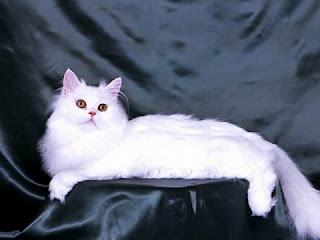
As is commonly known, today’s Persian cat breed has an extremely long, thick coat.  This cat’s legs seem to be short compared to its body size.  Its head is wide and the ears are rounded and typically set far apart. It has beautiful large round-ish eyes and an extremely fore-shortened, flat-faced muzzle, making its face seem almost squashed.
This breed of cat can have any color or markings, including, tortoiseshell, blue, tabby or pointed. There are tipped varieties also which are known as Chinchilla. Point types are known as Himalayan in the U.S. and Colorpoint Persian in Europe.
If you own a Persian cat, typically these cats require a little extra effort in the way of pet care. Their fur is so long and dense that it is difficult for them to groom themselves properly. Their constant licking for self-grooming can lead to a problem with hairballs, therefore, it is up to the pet owner to provide regular grooming. These cats should be bathed regularly and brushed thoroughly every day. They also may be prone to ‘tearing’ which can cause stains around the eye area. A daily face-wash is recommended.
Also, Persians should have their eyes checked on a regular basis for possible eye problems. Keep long hair back from their eyes as much as possible.  Long hair can irritate their eyes.
It is thought that Persian cats may be more prone to respiratory diseases than some other cat breeds, this has not been proven to date. These cats are generally a hardy, healthy cat. This breed generally has a life span of approximately 10-18 years.
This cat breed is one of the most popular in the United States today and is known for its docile temperament. They are loving, calm animals that are not pushy in demanding your attention. They are also not a really vocal cat, meaning that they do not ‘meow’ a lot. They also tend to be very tolerant of other animals in the home, whether it be another cat or a dog.  They make excellent family pets and they typically adapt very well to their environment. They are better suited as indoor pets, due to the high maintenance of their coats.

Sunday, July 17, 2016

Training Your Puppy

Potty Training
House Training Your Puppy
House training your puppy means teaching him where he is allowed to go to the bathroom.  This is one of the first lessons you need to teach your pet, and it is an important one.  The precedents you set for your pet in the first days of his time with you can last for a lifetime.  And you and your puppy need a clean and sanitary home to live so teaching basic house training is very important for your healthy living environment.  Unsanitary conditions due to pet urine and feces can promote germs and can lead to many health problems for you and your pet.
You should start house training your puppy the first week he is in your home.  Young puppies learn very quickly, but unless you can be with your pet 24 hours a day don’t expect him to be perfect at it right away.  Your puppy is a baby and still growing so his bladder may not be completely under his control.  You can expect little accidents up until he reaches about 6 months of age.
Also remember that what goes in also needs to come out.  It is natural for puppies to eat a lot (think of the amount of energy they spend) so it goes without saying that they also need to eliminate a lot. It is wise to take your puppy to the place where you want him to go to the bathroom every time after he eats.
When you first begin to paper train your puppy, confine him to a limited area in the house.  Cover the area with newspapers to catch whatever happens and to make cleanup easier.  But, don’t be surprised when your puppy chews the papers, or misses them entirely.  Puppies are puppies and they will be exploring everything that is within their reach.  They won’t immediately connect the papers with what you want them to do on them.  They won’t know yet what the papers are for.
Praise and reward are key at this time. When your puppy goes potty where they are supposed to give them lots of praise. where  Praise your puppy each time he goes ‘potty’ where he is supposed to.  When he goes on the paper, praise him.  If he misses, ignore it.  Puppies tend to learn quickly and  will soon realize that he gets praise for going on the paper.  Then gradually lessen the papered area each day by a small amount. Take a few papers away.   Don’t be discouraged or impatient with puppy if he ‘messes’ up.  Remember that he is still growing and learning.
When you begin trying to teach your puppy to go outside, you need to have a lot of time to spend in the training.  You need to take puppy outside whenever he needs to eliminate, which is probably about every 45 minutes for a young puppy.  He will need to go when he just wakes up, after he eats or drinks anything, and even after an energetic play session.  Again, the key here is reward and praise.  When puppy eliminates outside, praise him profusely.   Never scold him or reprimand him for mistakes inside the house.
You will have to be patient and consistent.  That is how your puppy will learn the best—repetition and praise.  Training puppies before they are  months old is very hard to do.
Housetraining your puppy is an important part of his learning experience.  Once he masters house training, you will be able to use the same techniques to train him in other things.  Using praise, repetition and reward is the right way to housetrain your puppy.

Friday, July 15, 2016

Feeding Your Pets

Feeding Your pets
Like people pets  can have major health problems depending types and how much food they receive.
Pets can have as many health issues relating to food that people do.  Because of this you need to be cognizant of your pet’s dietary needs.  As mentioned before, your pet is relying on you to do the right thing in keeping it healthy—and a healthy pet will live longer and provide you with more hours of joy.

Here again, it is up to you to do a little research.  Consulting your veterinarian about your pet’s feeding needs will surely help.  You can also read up on what diet is best for your pet.

Be aware that certain foods are better for certain pets.  For example, goldfish food should not be fed to tropical fish—the size and type of food is totally different.  Also bird feed differs for different types of birds.

It is not wise to rely totally on past history of what your parents fed their pets.  New advances and understanding in pet health issues have changed in the past few years and what was believed to be the ideal way of feeding your dog or cat in the olden days may not really be the best way today.

In previous years, dogs may have been fed totally on table scraps and chicken bones.  They could be getting too much rich, fat food in their diet, or they could choke on a chicken bone.

Today there are many brands of pet food made especially for your type of animal—even special ones for, say, small dogs versus large dogs, or kitten food versus food to aging cats.  The pet food companies try to incorporate the correct amount of vitamins and nutrients into the food that your pet needs to keep it healthy.  Many are dry varieties, but the pet food companies also try to keep pets happy with the taste.

Treats

It would not be out of line to give your pet the occasional treat or table scraps that they may enjoy (as long as it is not something harmful like chicken bones).  Just as people can indulge in the occasional decadent dessert, so can you treat your pet.  The important thing is that your pet receives the right food for it the majority of the time so that it gets a proper diet to keep it healthy.

When feeding your pet take a note from the Book of People.  When people are overweight they are more prone to have bad health issues.  This is the same with your pet.  In order to keep your pet healthy, be aware of its weight.  Overfeeding, even with loving intentions, can cause your pet to die before it should.

Check This Out